How to Protect Your Concrete from Freeze-Thaw and De-Icer Damage
Published 2026-08-30 · By Wilson Concrete & Landscaping
Call or Text Maynor(720) 572-0098
Denver can swing above and below freezing many times in a single winter. Each cycle lets water get into concrete, freeze, expand and stress the surface. Here's how to protect your investment.
1. Seal your concrete
A quality penetrating sealer reduces how much water and salt soak in. Reapply as recommended for the product, especially on driveways and stamped surfaces.
2. Be careful with de-icers
- Avoid rock salt on concrete, especially in its first winter.
- Never use ammonium-based de-icers on concrete.
- Use sand for traction when possible.
3. Shovel early
Removing snow before it's packed down means less ice and less need for chemicals. Use a plastic blade to avoid scraping the surface.
Get My Free Estimate
First-time customers save 10% · (720) 572-0098
4. Keep water moving away
Point downspouts away from slabs and fix low spots where water pools and freezes.
5. Watch for car slush
Slush that falls off cars carries road salt. Rinse the driveway on warmer days during winter.
Already seeing flaking or cracks? We repair and replace damaged concrete across the Denver metro. Free estimate: (720) 572-0098.
Frequently Asked Questions
What de-icer is safest for concrete?
Sand is safest. If you must use a de-icer, choose one labeled safe for concrete and use it sparingly, never on concrete less than a year old.
Related Services
 Pricing
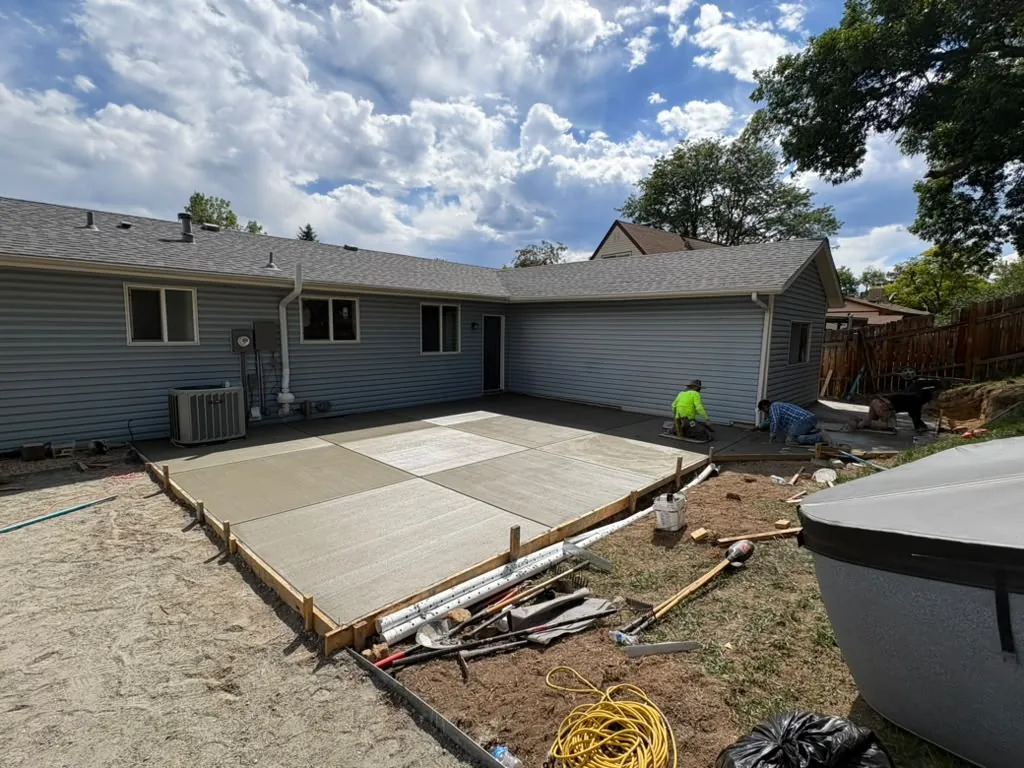
Concrete Patio Cost in Denver: What Really Drives the Price (2026 Guide)
Planning a concrete patio in the Denver area? Learn the 7 factors that set the price, from size and thickness to stamped finishes, and how to get an accurate quote.
Read article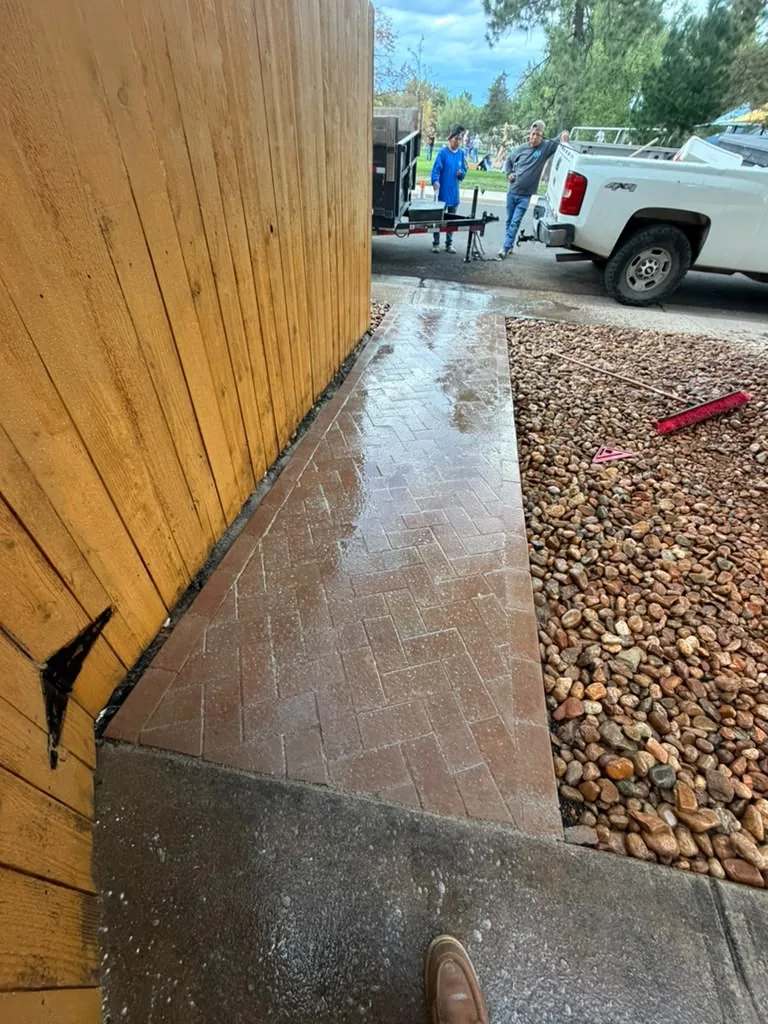 Patios
Concrete vs. Pavers: Which Patio Holds Up Better in Colorado?
Concrete or pavers for your Denver-area patio? Compare cost, durability, freeze-thaw performance, maintenance and looks to choose the right surface.
Read article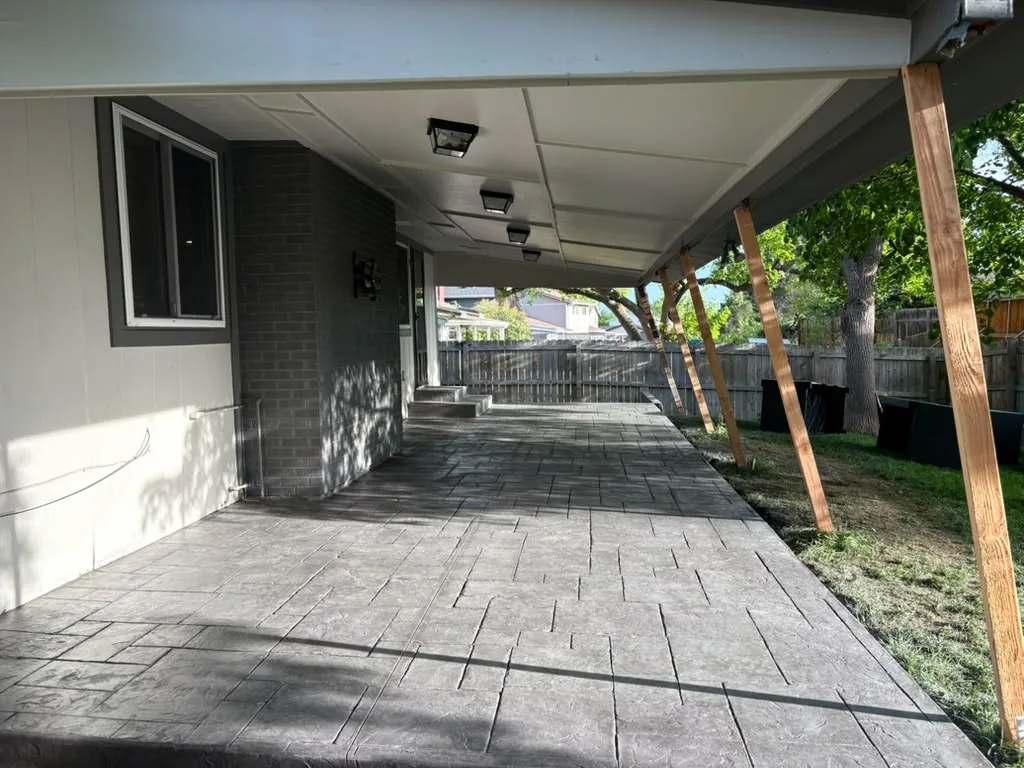 Design
Stamped Concrete Patterns & Colors: A Denver Homeowner's Guide
Ashlar slate, cobblestone, wood plank and more. See the most popular stamped concrete patterns and colors and how to choose one that fits your Denver home.
Read articleReady to Start Your Project?
Call or text Maynor directly, or request your free, no-obligation estimate today.
(720) 572-0098